Fix your conversion tracking before you touch a single bid
Optimising against bad data just gets you to the wrong destination faster. Here is the audit I run on every account before changing anything.
I have taken over accounts where the reported cost per conversion was £14 and the real one was £61. Nobody was lying. The tag fired on the contact page load rather than the submission, so every visit to the page counted as a lead.
Before I change a bid, a budget or a keyword, I check five things.
1. Is each conversion counted once?
Duplicate tags through both Google Tag Manager and a plugin are extremely common. Compare Google Ads conversions against actual orders or enquiries in your CRM for the same window. If they do not roughly agree, stop and fix that first.
2. Are you counting the right action?
Page views are not conversions. Newsletter signups should not be weighted the same as a £3,000 quote request. Set primary and secondary conversions deliberately so smart bidding optimises toward revenue, not activity.
3. Is the value real?
For ecommerce, check that revenue passed back excludes VAT and shipping consistently, and that refunds are handled. A feed reporting inflated values will teach the algorithm to chase your least profitable products.
4. What is the search terms report actually showing?
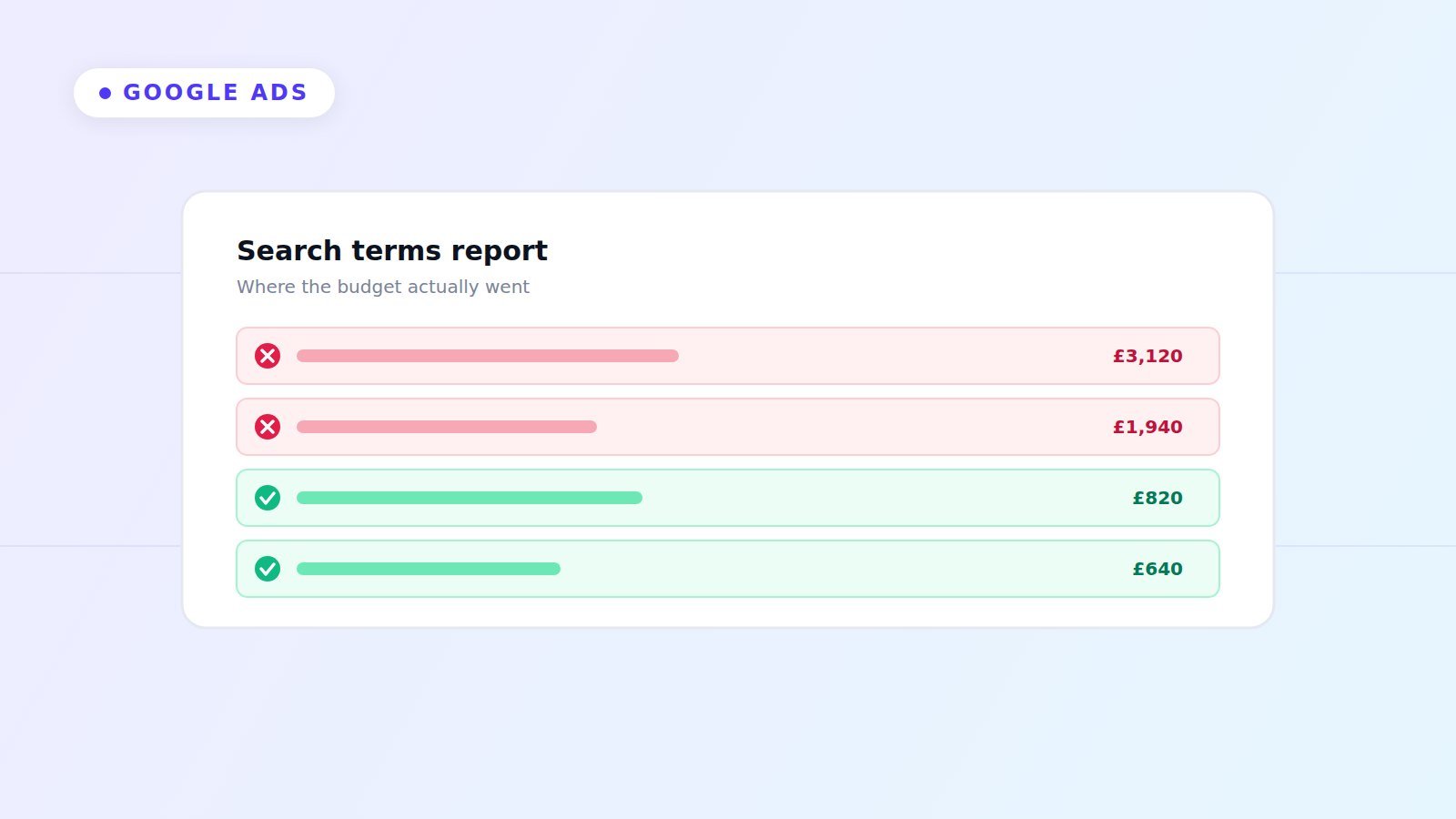
Broad match with smart bidding is fine when the data is good and expensive when it is not. Read the terms your budget went to last month. There is almost always a cluster of irrelevant traffic that a handful of negatives removes.
5. Does consent mode work?
If you run a consent banner and it is misconfigured, you may be losing a large share of conversion data — or collecting it unlawfully. Both are worth an hour to check.
None of this is glamorous, and it is routinely worth more than any bid strategy change. You cannot optimise what you are measuring wrongly.